Skip to content

Bass

Basses have long necks and heavy strings, so they feel changes in tension and humidity more than a guitar does. Here is what bass players notice most.

Illustration of a four-string bass

Common problems

What players notice most, what is usually behind it, and how we sort it out.
Buzz, especially on the lower strings or when playing hard

Usually
Too little neck relief, low saddles or uneven frets.
What we do
A setup for relief and action, set to how hard you play. Fret work if needed.

Strings feel high and the neck tiring to play

Usually
Too much relief after a change of season, high saddles or a high nut.
What we do
A full setup, with nut work if needed.

Notes higher up the neck sound sharp or flat

Usually
Intonation is off, or the strings are old and no longer vibrate evenly.
What we do
New strings and intonation.

Dull sound with little sustain

Usually
Old strings. Bass strings lose their brightness over time, even when they look fine.
What we do
Restringing. We can help you choose the set.

Weak, distorted or no sound on an active bass

Usually
A low 9V battery, or a loose connection in the preamp or jack.
What we do
Checking the battery, wiring and output jack.

Sharp fret ends along the side of the neck

Usually
The fretboard shrinks a little in dry conditions and the fret ends stick out.
What we do
Filing and dressing the fret ends.

Parts we look at

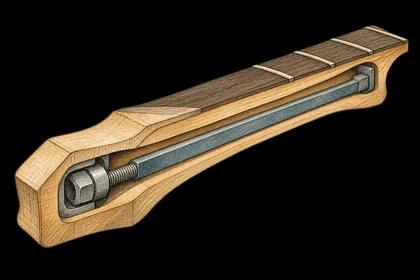
  • Truss rod

    Keeps the long neck straight against heavy string tension.

  • Frets

    Wear unevenly over time, causing buzz in some spots.
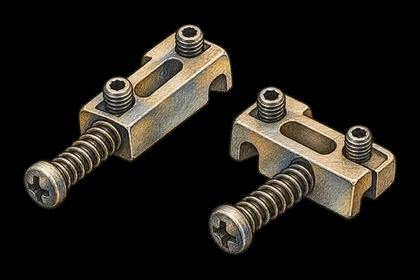
  • Bridge saddles

    Set string height and intonation for each string.

  • Pickups

    Their height changes output and the balance between strings.
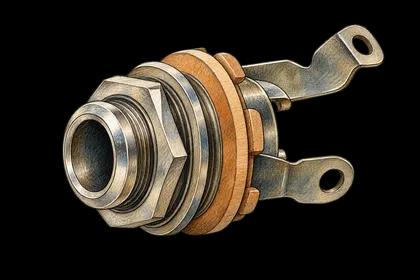
  • Output jack

    A loose jack is one of the most common causes of the sound cutting out.

  • Tuners

    Need to turn smoothly and hold tension without slipping.

Looking after it

  • Change strings when the sound goes dull, not only when one breaks.
  • On an active bass, unplug the cable when you're not playing, as it drains the battery.
  • Store it away from heaters; the long neck reacts to dry air.
  • Have the setup checked when the seasons change.

Something feels off?

Send us a photo and tell us what you notice. We'll tell you what it probably is and what it would cost.